Shopping for a used car in Pitt County should feel simple, transparent, and local. This car buying guide for Pitt NC walks you through setting a smart budget, comparing vehicles, checking history reports, and understanding North Carolina title, tax, and tag requirements. Whether you are focused on commuting in Greenville, weekend trips across Eastern NC, or a first car for a student, you will find practical steps to research, test drive, and finance with confidence. Use our local insights and tools to compare trim levels, mileage, ownership costs, and market pricing. If you are exploring financing, learn how rates, terms, and total cost of ownership work together. Ready to see what is available today in Pitt County and nearby markets? Start by reviewing inventory, prices, and recent sales trends. Helpful links to dig deeper include used-inventory, sold-inventory, used-car-financing-pitt-nc, and used-car-market-research-pitt-nc.
Use this Pitt NC car buying guide to compare vehicles side by side, calculate your real monthly cost, and prepare the exact documents you will need at signing. Learn how trade in values are set, how to read condition reports, and what to ask on a test drive. For deeper research, explore blog articles, our about-us page, and quick answers in the FAQ below. When questions come up, visit contact-us.
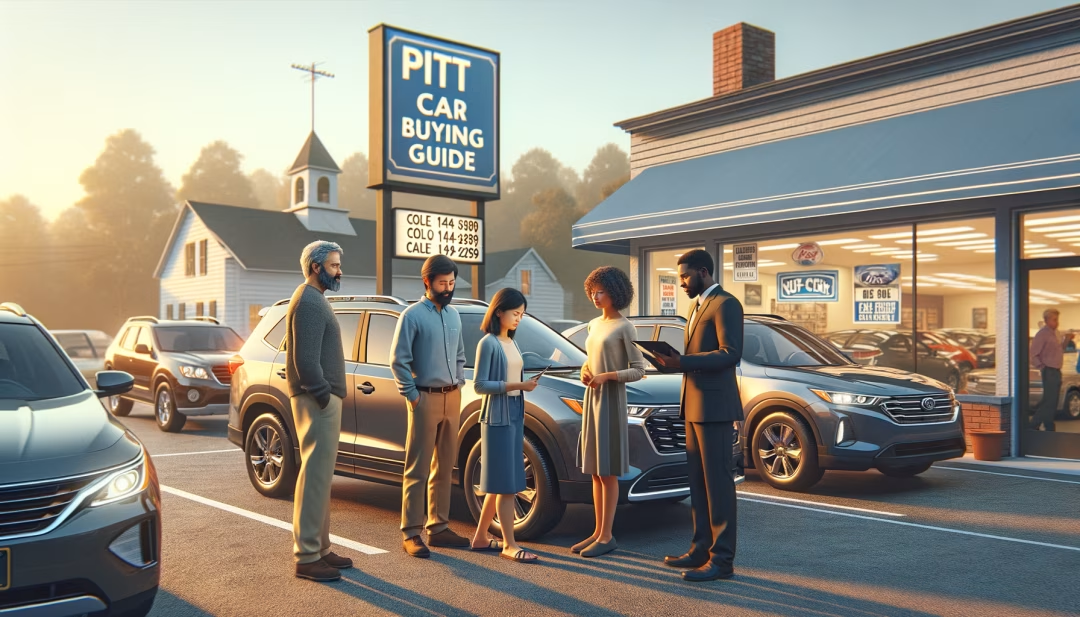
Pitt County drivers shop a mix of compact sedans, midsize SUVs, light trucks, and affordable hybrids. Because Greenville is a medical and university hub, demand is steady for reliable commuters with good fuel economy and low maintenance histories. Seasonal patterns matter. Tax refund season can tighten supply on budget friendly models, while late summer brings inventory suited for student needs. Knowing these rhythms helps you recognize a fair deal and act confidently when you find the right fit.
A smart budget looks beyond the monthly payment. Consider down payment, term length, interest rate, insurance, registration, and maintenance. Aim for a payment that is 10 to 15 percent of your take home income, or less if you prefer extra buffer for savings. Use our Pitt focused financing resources at used-car-financing-pitt-nc and flexible options for credit rebuilding at second-chance-auto-financing-pitt-nc to compare scenarios before you drive.
Start with market context. Our county specific insights at used-car-market-research-pitt-nc show pricing trends, popular models, and typical mileage bands in Pitt County. If you shop beyond county lines, check nearby data pages like used-car-market-research-wilson-nc, used-car-market-research-lenoir-nc, used-car-market-research-greene-nc, and used-car-market-research-beaufort-nc. These snapshots help you spot outliers and confirm that the price matches condition and mileage.
Financing approval considers income, debt to income ratio, credit profile, down payment, and vehicle selection. Shoppers with strong credit often receive lower rates and can choose longer terms with minimal change in rate. Credit building applicants can still secure a reliable vehicle by pairing a realistic budget with the right lender and down payment. Explore traditional options at used-car-financing-pitt-nc and credit rebuilding options at second-chance-auto-financing-pitt-nc.
Bring recent pay stubs, proof of residence, a valid North Carolina drivers license, and proof of insurance. If you have a trade, bring the title or payoff details. Ask your lender to provide a simple breakdown of payment, rate, term, and total financed so you know exactly what you will pay over the life of the loan.
A focused test drive saves time and reveals how a vehicle fits your daily routine. Drive on city streets and highway speeds to listen for wind noise, suspension clunks, or vibrations. Check the infotainment system, Bluetooth pairing, and backup camera clarity. Inspect interior wear on high touch points like the steering wheel and seat bolsters. Under the hood, look for clean fluids and no visible leaks. Confirm even tire wear and healthy tread. If you want a deeper check, ask about pre purchase inspection options with a local shop.
Clean your vehicle, gather records, and list recent maintenance. Small cosmetic touch ups can improve first impressions. Know your payoff, if any, and bring a lienholder letter. Compare your expected value against recent market sales in Pitt County. If you prefer to sell private party, weigh the extra time and effort against the trade convenience and tax savings you may receive when you apply the trade value to your purchase price.
A fair deal is simple and transparent. Separate your discussion into price, trade, and financing. Confirm the out the door amount that includes North Carolina title, registration, state inspection, and highway use tax. Ask for a written breakdown so you can compare offers accurately. When you find the right car at a right price, act promptly. Good vehicles move quickly in Pitt County and nearby Greenville markets.
To title and register your vehicle in North Carolina you will need a valid drivers license, proof of insurance, and completed title assignment. The state highway use tax is typically a percentage of the purchase price. Registration and plate fees vary depending on plate type and vehicle class. If you are new to the state, confirm any additional requirements for emissions or safety inspection. Your dealer will prepare the documents and guide you through signatures so your DMV processing is smooth.
Shop insurance quotes before you finalize a deal. Rate factors include driving history, garaging location, vehicle age, and safety equipment. Ask about discounts for telematics, multi policy bundles, or good student status. If you want extra peace of mind, consider a service contract or gap coverage and be sure to read coverage terms, deductibles, exclusions, and claim steps.
Set reminders for your first oil change, tire rotation schedule, and annual state inspection. Keep digital copies of your bill of sale, finance contract, and warranty booklet. If your vehicle has a timing belt or hybrid components with special maintenance intervals, note those milestones now. Organize a simple glovebox log so you can track maintenance and preserve resale value for the next owner.
Explore inventory, research, and policies across our site. These pages are useful throughout your journey.