Welcome to the used car market research hub for Yancey County North Carolina. If you live in or near Burnsville or drive the Blue Ridge backroads daily you already know that mountain conditions shape what makes a smart used car purchase. This page distills local insights to help you compare prices, judge trim packages that matter for steep grades, and evaluate total cost of ownership in a rural mountain county. Learn how all wheel drive, ground clearance, towing capacity, and service history impact value, and see how Yancey listings stack up against nearby markets like Asheville, Mitchell, Madison, and Avery. You will also find guidance for reading vehicle history reports, tips for setting a fair budget, and links to research tools. When you are ready to see real vehicles, review our used inventory and recent sales to benchmark pricing and availability tailored to Western North Carolina.
This local guide explains what drives pricing in Yancey County, which features hold value on mountain roads, how to evaluate comparable listings across Western North Carolina, and where to find trusted resources for VIN checks and valuation. It also includes a detailed inspection checklist, budgeting tips for used car financing in North Carolina, and a research focused FAQ.
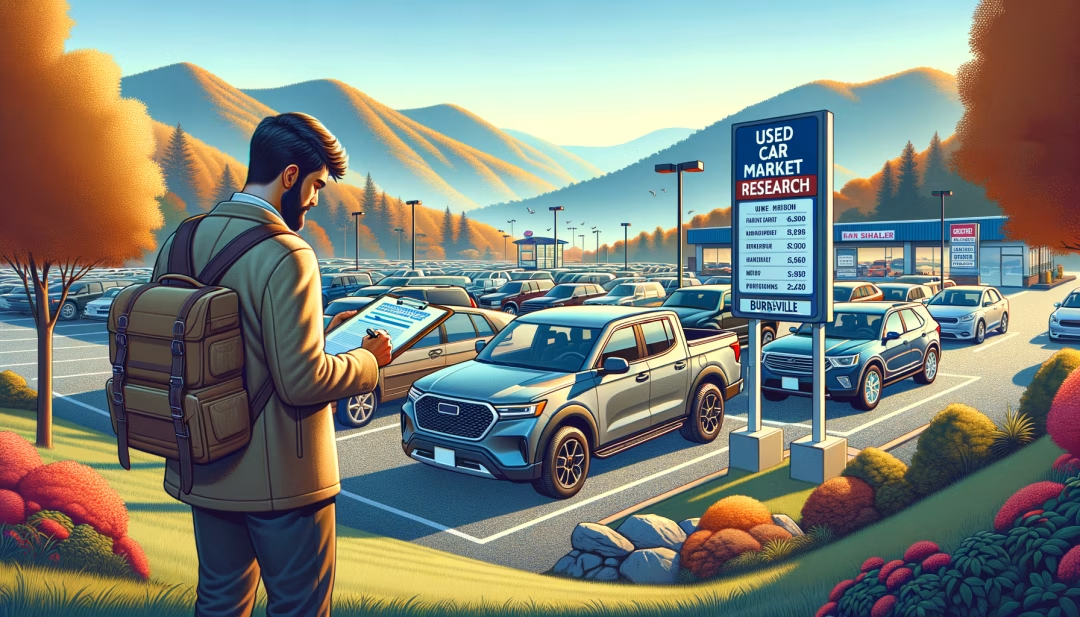
Yancey County is mountain country. Elevation changes, winding rural roads, and winter weather patterns mean shoppers often prioritize traction, braking confidence, and durability. That translates to steady demand for compact and midsize sport utility vehicles, crossovers with all wheel drive, and light trucks that can tow small trailers or handle gravel driveways. Sedans and compact cars are still viable for many commuters, especially on US 19E and NC 80, but resale value often favors vehicles with ground clearance and snow friendly features. Because inventory in a small county can be limited, smart buyers compare options within a 50 to 100 mile radius, including Asheville, Mars Hill, Spruce Pine, Boone, and Johnson City Tennessee. Doing so helps you validate prices, identify rare trims, and find better mileage or service histories without sacrificing essential features for mountain living.
Your final price is the sum of vehicle condition, features that fit mountain use, and broader market dynamics. Here is how each factor tends to play out locally.
Demand often centers on vehicles that balance capability and fuel economy. Compact SUVs like Honda CR V, Toyota RAV4, Subaru Forester, and Mazda CX 5 are perennial favorites. For wagons and adventure ready commuters, Subaru Outback and Crosstrek do well. Midsize pickups like Toyota Tacoma, Ford Ranger, Chevrolet Colorado, and Nissan Frontier hold value due to versatility and maneuverability on narrow roads. Full size trucks and larger SUVs suit drivers who tow small campers or boats but require careful budgeting for fuel and tires. If you are city commuting to Asheville, efficient sedans and hybrids can be excellent values, especially with strong service history and modern driver assist features.
Because smaller markets can show price swings based on a handful of listings, create comps from multiple nearby counties and adjust for key features. Pull data from Yancey, Buncombe, Mitchell, Madison, Avery, and Watauga. Match year, trim, drivetrain, mileage band, condition, accident history, and options like premium safety packages or panoramic roofs. Track days on market and price adjustments over two to three weeks for a clear trend. Use our live listings and recent sale outcomes to understand how quickly similar vehicles move.
Use valuation sites to triangulate a fair private party and dealer retail range. Confirm packages and options with the build sheet if available. Then verify VIN based history through a reputable provider.
A careful inspection helps confirm value and reduce ownership surprises in hilly terrain. Bring a flashlight and work through this list.
Build your budget around the purchase price and the true cost to drive in a mountainous county. Add estimates for state related fees, insurance, and a realistic maintenance reserve. Tires, brakes, and fluid service may come early if the vehicle will immediately see steep grades or gravel. If credit building is part of your plan, review second chance lending resources and compare term length to expected usage. Shorter terms reduce total interest but require confident monthly income. Longer terms can ease cash flow but make sure you do not overextend beyond the vehicle life you expect on hilly routes.
Seasonality matters in the mountains. AWD crossovers and trucks often tighten in late fall and winter, so midsummer can be attractive for shoppers who want selection without peak seasonal premiums. Conversely, if you prefer a sports coupe or convertible for the Parkway, late fall may bring better pricing as demand shifts to winter capable vehicles. Regardless of season, monitor the same models for two or more weeks to see price movements and days on market. Vehicles that sit may be overpriced or simply waiting for the right buyer. A clean history and fresh service will often sell quickly even at market price.
Hybrids perform well in rolling terrain thanks to regenerative braking that captures energy on descents. Battery electric vehicles are viable for many drivers in Yancey who have home charging and predictable routes. Expect range to vary in cold weather and on long climbs. When researching used electrified vehicles, confirm battery health reports where available and check for thermal management systems that protect battery longevity on both hot and cold days. Study local charging options if you plan regular drives beyond county borders or into high elevation trailheads.
Insurance rates depend on driver profile and vehicle type. Safety tech such as forward collision warning, adaptive cruise, and lane keeping often lowers premiums. For total ownership costs, plan for quality tires and regular brake service. Vehicles with timing chains may reduce long term maintenance compared to timing belts that require scheduled replacement. Build a simple spreadsheet with purchase price, taxes and fees, predicted maintenance, fuel, insurance, and any accessories like crossbars or cargo boxes. The lowest upfront price is not always the lowest cost to own on mountain roads.
Our goal is transparency. Browse current listings to benchmark live Yancey County prices, then compare them to nearby counties. Review recent sales to understand what actually moves. Read practical tips on our blog and get to know our team and process on the about page. If you have questions about a VIN, reach out for documentation and service records where available.
Compare trends across North Carolina. Neighboring and high demand counties can influence pricing in Yancey, especially for sought after trims and outdoor friendly builds.